
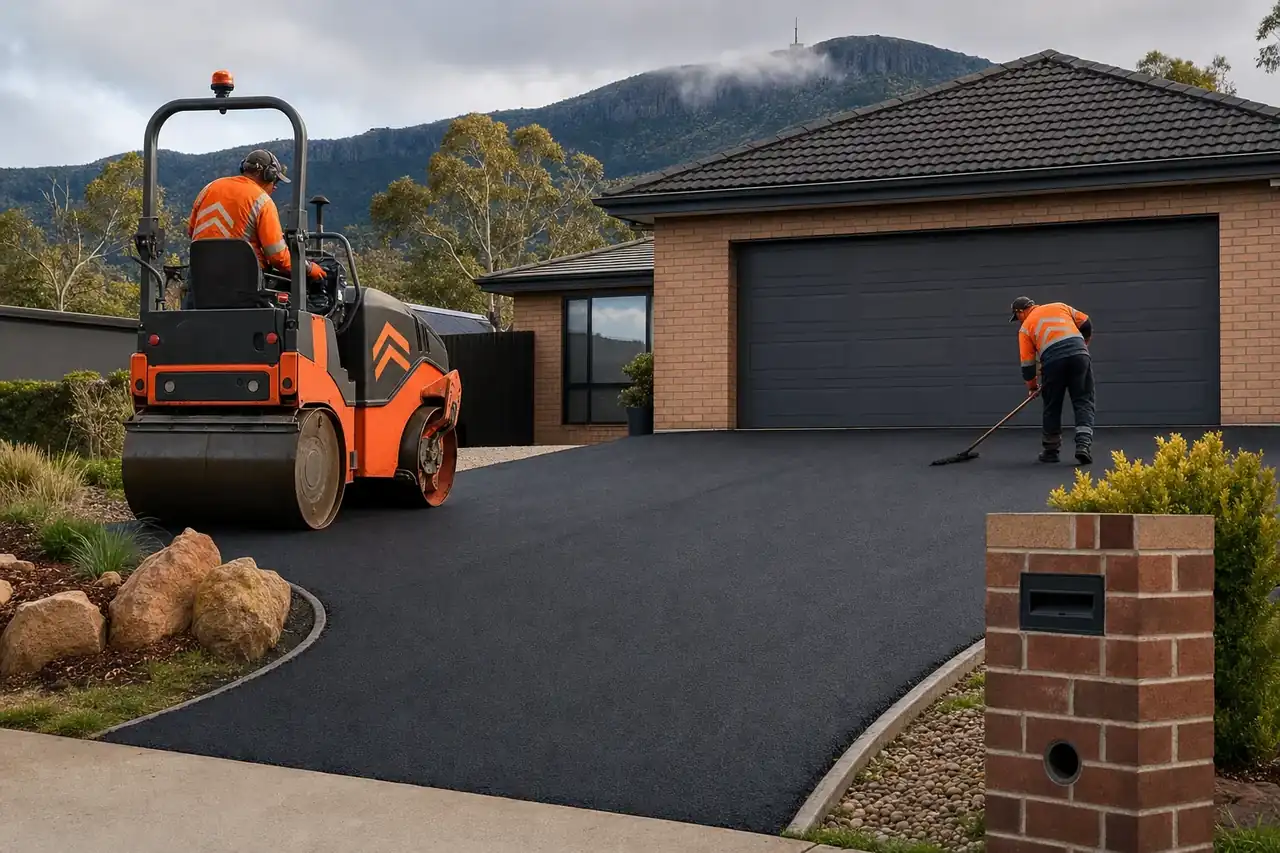
Asphalt Driveways Hobart
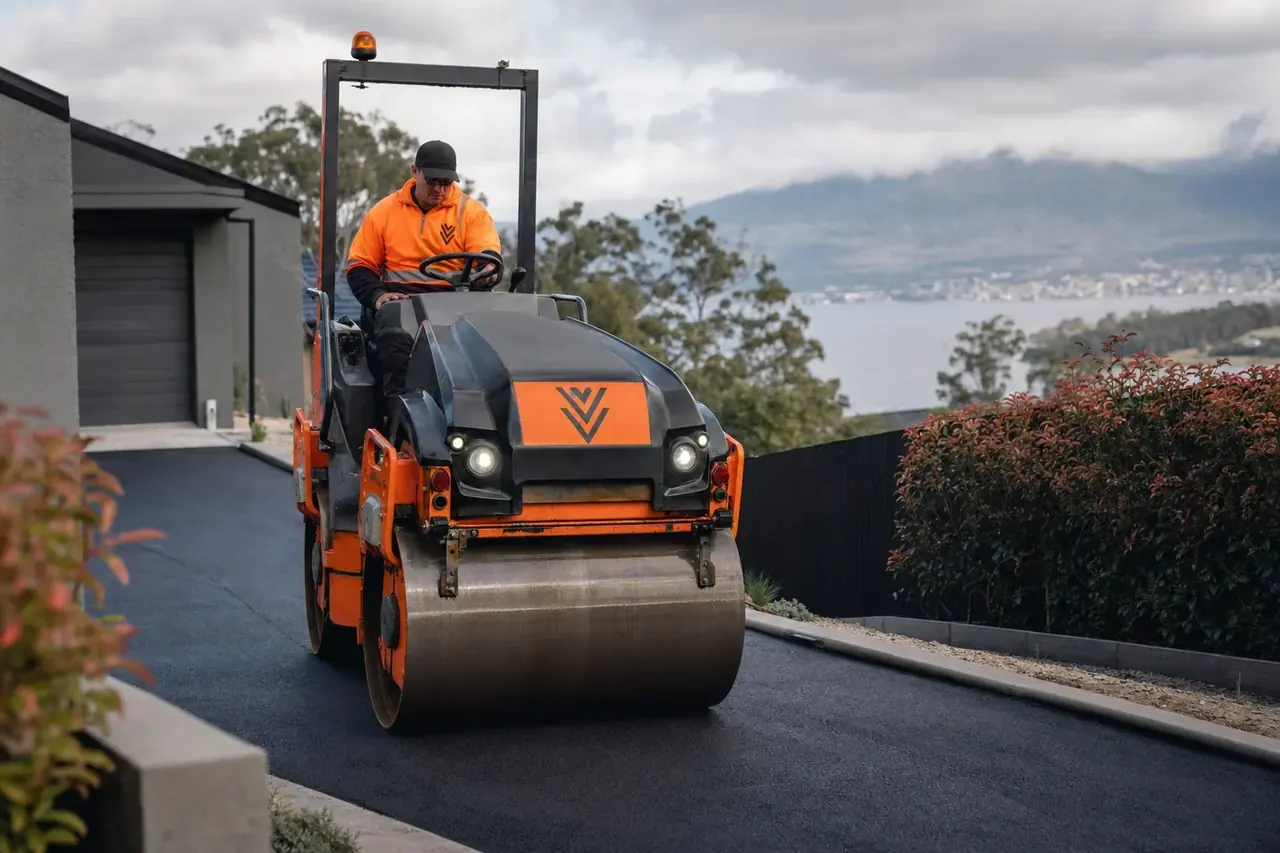
An asphalt driveway is the most practical surface choice for a residential property in Hobart. It comes in at a fraction of the cost of concrete, goes down quickly, and handles southern Tasmania's wet winters without turning to mud.
Most driveways we do are a single-day job. The base crew goes in first thing to strip and compact, the hot mix arrives mid-morning, and we're rolling the finish coat by early afternoon. You're on it with the car the next day.
The thing that separates a driveway that holds up from one that ruts within two years is what's underneath. We take the base prep seriously, correct depth, proper compaction, falls set to drain water off the surface, not pond on it.
Why it matters
- Costs well under half of concrete per square metre installed
- Faster to complete than concrete, no seven-day wait before driving on it
- Flexible surface that moves with the ground rather than cracking under freeze-thaw pressure
- Easier and cheaper to repair than concrete if damage does occur
- Quieter underfoot and under tyre than concrete or pressed pavers
- Re-seal options at year 7–10 extend service life without a full re-pour
THE PROCESS
How we do it
Site visit and written quote
We come out, measure the area, assess the existing ground condition, check access, and hand you a fixed written price within 48 hours.
Topsoil strip and sub-base
Strip organic material to a stable subgrade, lay 100–150mm of compacted road-base, set the falls to run water toward the street.
Edge formwork where required
Timber edge forms along any soft or garden boundary. Hard edges like existing concrete kerbs or slabs we butt straight up to.
Hot-mix delivery and lay
Asphalt is delivered direct from the plant while it's still hot. Laid by hand screed or small tracked paver depending on the site access.
Roller compaction and edges
Roller passes while the mix is hot. Edges tightened, joints rolled clean, surface left smooth and even.
Cure and handover
Walkable in a few hours, light vehicles after 24–48 hours, heavy vehicles and trailers after 7 days.
COMPARISON
How it stacks up
Picking the right surface for a Hobart driveway comes down to cost, longevity, and what your site can handle. Here's how the main options actually compare.
| Feature | Asphalt | Concrete | Gravel |
|---|---|---|---|
| Cost per m² installed | Mid, $50–$80/m² | Highest, $90–$150/m² | Lowest, $15–$35/m² |
| Typical lifespan | 20-25 years | 30-40 years | 5-10 years before refresh |
| Time to drive on | 24-48 hours | 7-10 days | Immediately |
| Repair ease | Easy, blends well | Difficult, panels show | Easy, top up gravel |
| Look on a Hobart property | Clean dark black | Stark light grey | Informal, rural feel |
| Drainage | Solid surface, runs to falls | Solid surface, runs to falls | Permeable, drains in place |
| Cold and wet weather pour | Yes, with care above 5°C | Difficult below 5°C | Anytime |
| Freeze-thaw performance | Excellent, flexible surface absorbs movement | Fair, can crack at control joints | Good, no rigid surface to crack |
| Re-seal / maintenance option | Yes, bitumen seal at year 7–10 adds decade of life | Difficult, no equivalent surface treatment | Top up gravel periodically |
AFTERCARE
Looking after your new asphalt driveway
Asphalt is a working surface, not a showpiece. Treat it sensibly for the first month and it will run for 25 years without major drama.
First 48 hours
Light foot traffic after a few hours is fine. Cars after 24–48 hours. Keep heavy vehicles, trailers and anything loaded off it for 7 full days while the mix hardens through.
First summer in Hobart
Fresh asphalt softens in direct sun until it finishes curing. Don't leave a stationary vehicle baking in one spot for hours on a hot day in the first 6 months. Move the parking position around.
Oil and fuel spills
Deal with spills immediately. Petrol, diesel and engine oil break down the bitumen binder. Left overnight, they'll leave a soft patch that never fully hardens.
Edge protection
The driveway edge is the most vulnerable point, the section where the asphalt is thin and unsupported on the garden side. Keep heavy vehicles away from the last 300mm of the edge and consider a mowing strip at the boundary to take the lawn tyre pressure off the asphalt edge.
Year 2 seal coat
A bitumen top-up at year 2 seals micro-cracks, deepens the black colour, and buys you another 5 years on the surface. We do it for around $4–$8 per m².
Year 7–10 re-seal
At the 7–10 year mark a full re-seal is worth doing. Strip loose surface material, clean, and re-coat. Far cheaper than a full re-pour and gives you another decade easily.
Winter crack check
Before each Hobart winter, walk the driveway and look for hairline cracks wider than 2mm. Seal them with a brushable crack-seal compound before the wet season drives water into the base. This one annual check is cheaper over 25 years than any other maintenance task.
Weed control at edges
Weeds and grass growing through the edge of the driveway work their roots into the joint between the asphalt and the garden edge. Left unchecked, root pressure widens the crack and lets water in. Pull or spray them when they're small.
PRICING
What it costs in Hobart (2026)
- $Standard residential driveway: $50–$80/m² supplied and laid in 2026
- $Most Hobart driveways are 50–100m², so $2,500–$8,000 all up
- $Base prep if the existing surface needs a full strip adds $20–$40/m²
- $Crossover to the kerb is a separate scope, usually $1,200–$2,500 with council sign-off
- $Tight-access surcharge for sites where the paver can't get through: $300–$600
- $Get the price in writing before committing, site-specific factors shift every quote
Site-specific factors change every quote. Get the price in writing before you commit to anything.
FAQ
Asphalt Driveways, common questions
Can asphalt go over an existing concrete driveway?+
Sometimes. If the concrete slab is structurally intact with no major fractures, a 40–50mm asphalt overlay can go straight on top. If the slab is heaving or crumbling, demolition first is the right call or you'll just be papering over the problem.
How soon can I drive on it?+
Light passenger vehicles after 24–48 hours. Heavy loads, boat trailers, caravans, loaded utes, wait 7 days while the mix cures through properly.
Will the surface crack the way concrete does?+
Asphalt is a flexible surface, which is why it handles ground movement and freeze-thaw cycles better than concrete. Hairline cracks can appear over time but are straightforward to seal and don't compromise the driveway structure.
How long should an asphalt driveway last in Hobart?+
A properly laid driveway in greater Hobart should go 20–25 years. A re-seal at around year 7–10 extends the life and keeps the surface looking sharp. The re-seal is nowhere near the cost of a full re-pour.
Do you offer a seal coat after the driveway is laid?+
Yes. We recommend a bitumen top-up seal at around the 2-year mark once the surface has weathered in. It deepens the black finish and closes any micro-cracks before they let water under. Budget around $4–$8/m².
What thickness of asphalt do you use for a residential driveway?+
Standard residential: 40–50mm of compacted hot-mix over 100mm of compacted road-base. If you're running a boat trailer or camper trailer regularly, we'll recommend 50–60mm surface course over 150mm base. We spec it at the site visit based on what you're putting on it.
Do Hobart's cold winters affect how long the job takes?+
Hot-mix lays in most conditions above 5°C and dry. A Hobart winter gives us plenty of workable days between the wet spells. We won't lay on a wet day, water under fresh asphalt is the fastest route to early failure. We plan around the weather and give you realistic scheduling at the quote stage.
Can you match the colour of an existing asphalt section?+
Fresh asphalt is always darker than aged pavement and there's no reliable way to match exactly. Within 12–18 months of weathering the new section blends considerably. If perfect visual consistency matters from day one, a full re-seal over the whole driveway area after the new section is laid is the cleanest solution.
Do I need council approval for a residential driveway?+
The driveway within your property boundary does not require council approval. The section from your property line to the road kerb, the crossover, does require a council application, and we manage that separately. We'll confirm what's required at the site visit depending on whether your property has an existing compliant crossover.
What are the drainage requirements for a Hobart driveway?+
Greater Hobart sees an average of around 620mm of rainfall per year, and driveway drainage is not optional. We grade drainage falls of 1:60 to 1:80 across the driveway surface to run water toward the kerb or a side channel. Where the property is set below the road level, a lintel drain or channel drain across the driveway entry is included in the quote to stop road runoff pooling at the garage door.
Can you remove and dispose of the old driveway surface?+
Yes. Old concrete or asphalt is saw-cut, broken up, loaded and disposed of off-site. Concrete disposal is typically $120–$200 per tonne depending on the load. The cost is quoted separately so it's clear what's included. In some cases, crushed concrete from the demolition can be re-used on-site as fill material, which reduces disposal costs.
READY TO START?
Free quote, in writing
We come out, take a look, and hand you a fixed written price within 48 hours. No obligation, no pressure, no bait-and-switch on the day.
Need asphalt driveways?
Free site visit. Written quote within 48 hours.
(03) 6170 6004Quotes usually within 48 hours
READY TO START?
Get a free quote
We come out, take a look, and hand you a written price within 48 hours. No obligation, no pressure.