
Road Patches Hobart
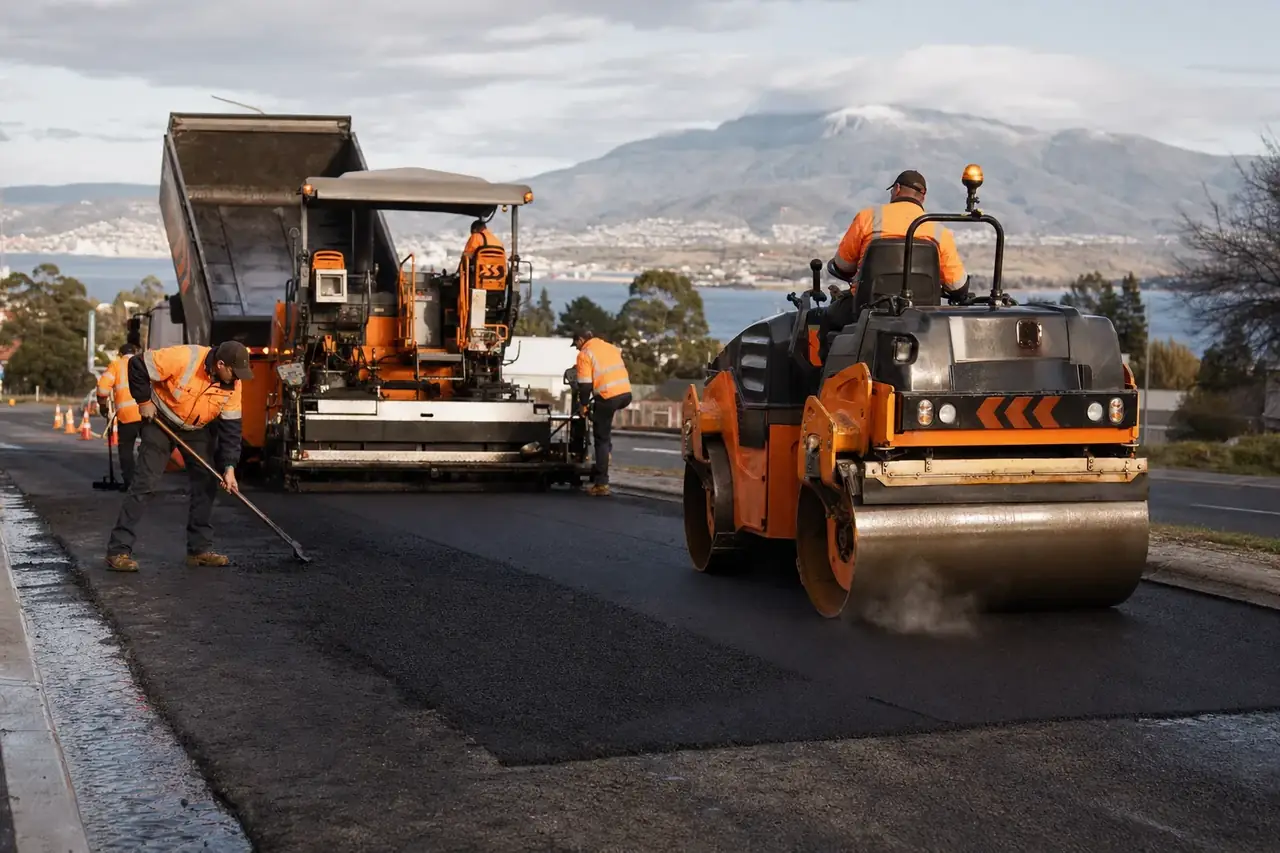
Road patches cover the range between a single pothole and a full resurfacing job, anything from 1m² up to 50m² where the surface has failed across a wider section. Wheel rutting, alligator cracking, bleeding, or an area where the sub-base has gone soft.
We do road patch work for City of Hobart, Glenorchy City Council, Clarence City Council, Kingborough Council, private road owners, and civil contractors operating across southern Tasmania.
The straight-up answer on patch versus resurface: under 30% of the road area failed means patching is the smart call. Over 50% means you're better off resurfacing and we'll tell you that at the quote even if it means more work for us.
Why it matters
- Targeted patching is substantially cheaper than resurfacing the whole road
- Properly done hot-mix patches last 15+ years under normal road traffic
- Certified for council and civil contractor use across southern Tasmania
- Most patch jobs booked and completed within a week of the site visit
- Honest assessment of patch versus resurface at every site inspection
THE PROCESS
How we do it
Site inspection and scope
Walk the affected section, measure the failure area, identify the likely cause, drainage, sub-base, or surface fatigue.
Saw-cut the perimeter
Define clean rectangular edges around the failed area so the new asphalt has proper bonding surfaces.
Excavate and check the base
Dig out the failed asphalt. If the sub-base has failed too, remove it and replace before laying.
Tack coat the cut edges
Apply bitumen emulsion to the vertical edges to bond new mix to old pavement.
Lay hot mix in lifts
For deep patches: 50–75mm lifts with compaction between each lift. No single bulk-pour for depth.
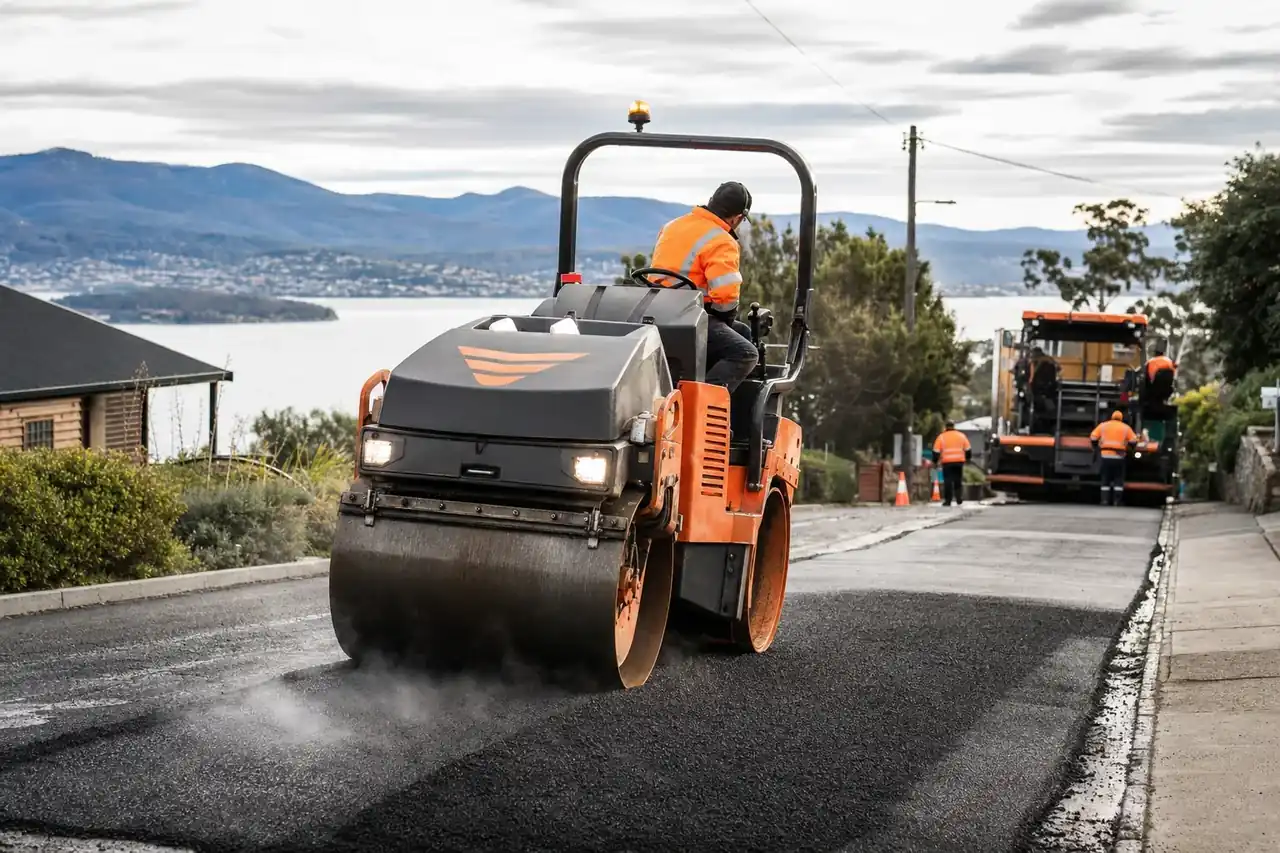
Roller compaction and edge seal
Compact to surrounding road density. Edge sealant applied to keep water out of the joint.
COMPARISON
How it stacks up
Three levels of road repair for sections that have failed wider than a single pothole. The right one depends on how much of the road is actually gone.
| Feature | Cold-mix patch | Hot-mix patch | Mill-and-fill section |
|---|---|---|---|
| Cost per m² | Lowest, materials only | Mid, $60–$110/m² | Highest, $80–$140/m² |
| Lifespan | Under 12 months | 10-15 years | 15-20 years |
| Time on site | Under an hour per patch | Half day per section | Full day or more |
| Best for | Emergency, wet conditions, winter, temporary | Standard road patch, our default | Full pavement section failure, heavy traffic roads |
| Weather window | Any conditions | Dry, above 5°C | Dry, above 5°C |
| Traffic disruption | Minimal | 1-2 hours per patch section | Half day per full section |
| Council acceptance in Hobart area | Temporary measure only | Yes, all Hobart-area councils | Yes, preferred for major failures |
| Sub-base replacement option | No | Yes, done on the day | Yes, integral to the process |
AFTERCARE
Watching the patch after we leave
A road patch is only as strong as the base underneath it. We assess and compact the sub-base properly before laying, but sealed road bases continue to age independently. Things to watch.
First 30 days
Any settlement more than 5mm at the edge joint in the first month means the sub-base under that point was compromised in a way we couldn't see at quote-time. Call us and we'll come back under warranty.
Annual drive-over check
Drive over the patch slowly once a year. A tight joint stays tight; one that's starting to drop at the edges is the early warning of water getting in and undermining the base.
Crack seal at year 3–5
A crack forming along the joint between new patch and old road at the 3–5 year mark is normal differential movement. Sealing it immediately stops water from restarting the failure cycle.
New potholes nearby
If potholes start appearing within 2–3 metres of the patch, the surrounding pavement is also failing. Time to plan a larger mill-and-fill section before the whole area goes.
Heavy vehicle loading changes
If a private road that was originally built for cars now regularly carries heavy delivery trucks, concrete mixers or tip trucks, the patch-frequency will increase, the pavement was never designed for that load. Let us know about load changes and we'll advise on whether a full base upgrade is the better long-term answer.
After extreme weather events
Hobart's wet winters concentrate a lot of rainfall in short periods. After any extreme weather event, walk or drive the road and note any new surface movement, edge drop or pothole formation. Early intervention costs a fraction of what a failure left to spread will cost.
PRICING
What it costs in Hobart (2026)
- $Small road patch 1–5m²: $300–$900 per patch
- $Medium patch 5–20m²: $70–$110/m²
- $Larger patch 20–50m²: $60–$95/m²
- $Sub-base replacement if needed: add $40–$70/m² on top of the above
- $Mobilisation and setup per visit: $200–$500 depending on distance from central Hobart
- $Traffic management where required: $400–$1,200 depending on road classification
Site-specific factors change every quote. Get the price in writing before you commit to anything.
FAQ
Road Patches, common questions
When is patching the right call versus resurfacing?+
Under 30% of road area failed, patch. 30–50%, we'll quote both and show you the numbers. Over 50%, resurface, the patch costs won't add up over time. Patches on a deteriorating road don't last because the surrounding pavement keeps degrading around them.
Do you patch private roads?+
Yes. Private estate roads, long residential driveways, farm tracks and small industrial internal roads. Same process, often faster scheduling than council work.
How long does a hot-mix road patch last?+
Properly done with edge sealing and correct base assessment: 15+ years. If the surrounding road pavement is being maintained, the patch typically outlasts the road around it.
Can you work through a Hobart winter?+
Yes, as long as conditions are dry and ground temperature is above 5°C. Most Hobart winters have workable weeks between the wet spells. We plan around the weather and won't lay on a wet day.
Do you sub-contract asphalt patching to civil contractors?+
Yes. We take sub-contract patch and reinstatement work from civil contractors on larger projects. Insurance certificates, public liability confirmation and capability statements available on request.
What causes alligator cracking and how do you treat it?+
Alligator cracking, the interconnected crack pattern that looks like crocodile skin, indicates sub-base failure. The surface is showing the symptom but the cause is underneath. Surface patching alone won't hold. We excavate, assess the base, replace what's failed, and lay fresh asphalt over a repaired foundation. It costs more than a surface patch but is the only fix that lasts.
Can you do road patch work on a live road without full closure?+
Yes. For patches on minor roads, laneways and private roads we use traffic control, spotters, stop/slow bats, temporary warning signs, to manage traffic around the work. Full road closures are sometimes necessary on narrow streets but we try to minimise that disruption. Traffic management plans are prepared for any work requiring it.
What's the difference between a road patch and a pothole repair?+
A pothole is a discrete hole, usually under 0.5m². A road patch covers a larger area of surface failure, rutting, cracking, bleeding or base failure across a wider zone. The repair method is similar in principle but a larger patch requires a tracked roller rather than a vibratory plate and often involves sub-base replacement.
Can you do patches on sealed gravel roads?+
If the road has a sealed asphalt surface, yes. If it's unsealed gravel, that's a different trade, we work on sealed surfaces only.
How do you deal with road drainage when doing a patch?+
Every patch assessment includes a check of the drainage around the failed area. If water is getting under the surface from a broken kerb drain, blocked lintel or poor cross-fall, we identify it and quote remediation as part of the patch scope. Patching the surface without fixing the drainage is a temporary fix, the base will fail again from the same cause.
READY TO START?
Free quote, in writing
We come out, take a look, and hand you a fixed written price within 48 hours. No obligation, no pressure, no bait-and-switch on the day.
Need road patches?
Free site visit. Written quote within 48 hours.
(03) 6170 6004Quotes usually within 48 hours
READY TO START?
Get a free quote
We come out, take a look, and hand you a written price within 48 hours. No obligation, no pressure.