
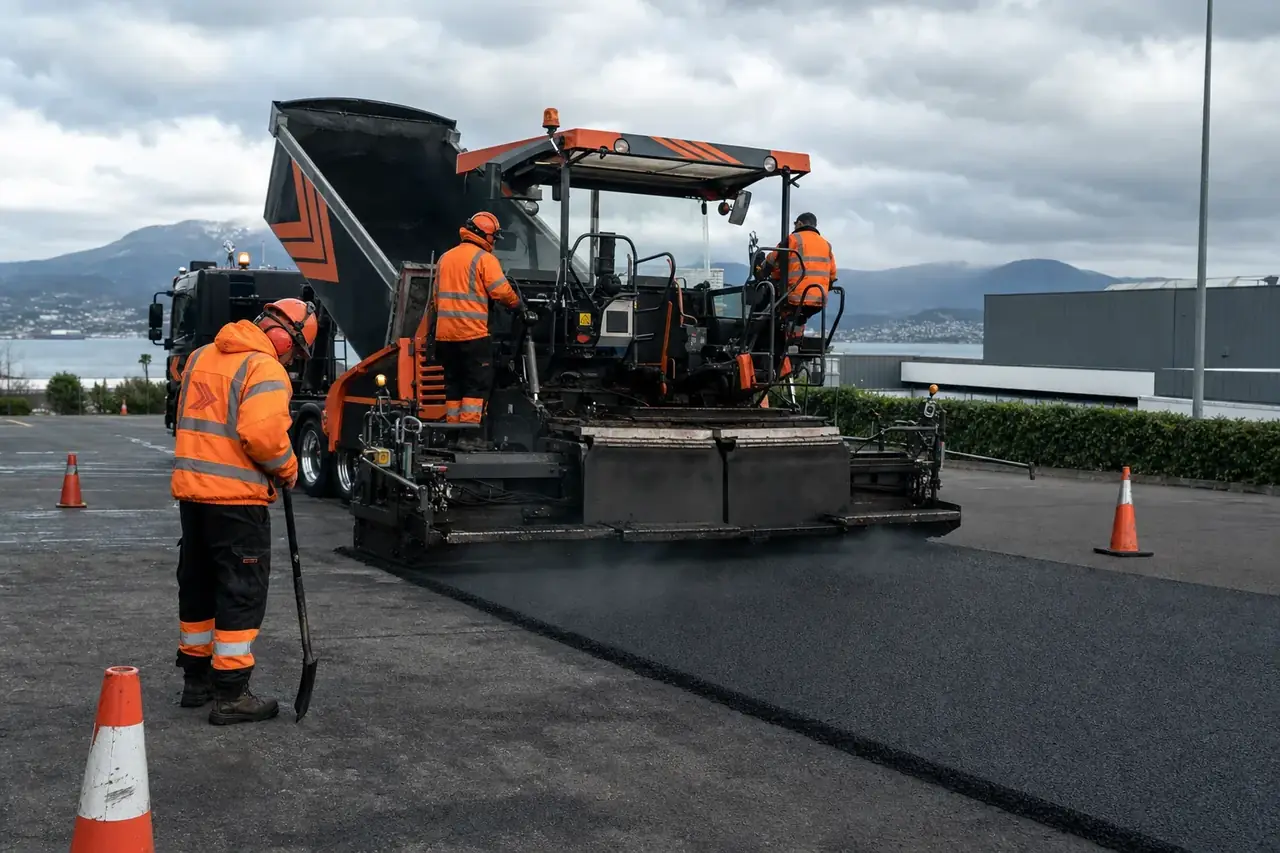
Carpark Resurfacing Hobart
A deteriorating carpark does damage before a customer even reaches your front door. Cracked surface, faded bay lines, a pothole near the entrance, it signals that the operation isn't being looked after.
We resurface carparks across Hobart and southern Tasmania for retailers, cafes, medical and allied health premises, sporting clubs, churches, and small industrial properties. Most jobs run over a weekend so trading hours aren't disrupted.
The assessment is always the starting point. Overlay is the right call when the existing base is structurally sound and it's only the surface wearing out. Full removal and re-pour is the call when the base itself has failed. We tell you which one your job actually needs.
Why it matters
- Renews a customer-facing surface that was costing the business first impressions
- Removes trip hazards and reduces public liability exposure on cracked or potholed areas
- Weekend scheduling keeps trading-day disruption to zero for most jobs
- Line marking done the same day as the surface seal so you reopen fully functional
- Correct drainage falls stop water pooling in bays and at the entry
THE PROCESS
How we do it
Site visit and scope
We measure the carpark, assess the base condition, recommend overlay or full strip, and quote both with line marking included.
Schedule around trading
Most jobs start Friday afternoon and run through Sunday. Hot-mix deliveries timed for early starts.
Preparation, overlay or strip
Overlay: clean sweep and tack coat applied to the existing surface. Full re-pour: saw-cut perimeter, excavate, re-compact base to spec.
Hot-mix lay
Mix delivered from the plant. Tracked paver for areas over 100m², hand screed for tighter zones and around drainage pits.
Pit and lintel adjustment
Every drainage pit, lintel and service lid adjusted to match the new surface height. An overlay raises the surface by 40–50mm, all pits get assessed before and adjusted during the lay.
Line marking
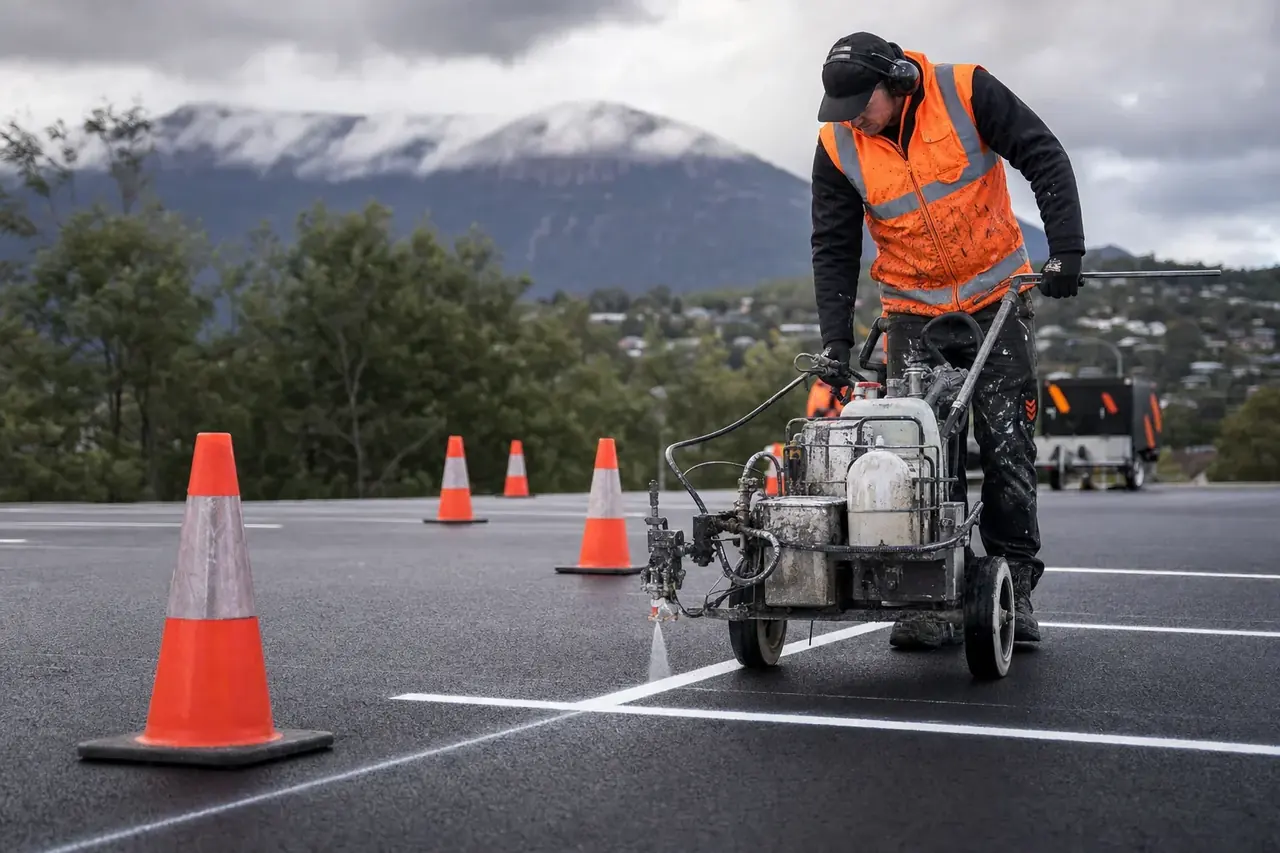
Bay lines, disabled bays, directional arrows, no-standing and fire-lane lines applied once the surface is set.
Reopen for trading
Carpark handed back fully cured and line-marked, ready for Monday morning.
COMPARISON
How it stacks up
Three ways to get a tired Hobart carpark back in service. The right one depends on how much of the underlying structure is still solid.
| Feature | Overlay | Mill-and-fill | Full re-pour |
|---|---|---|---|
| Cost per m² | Lowest, $50–$85/m² | Mid, $65–$110/m² | Highest, $85–$130/m² |
| Lifespan after works | 8-12 years | 15-20 years | 20-25 years |
| Business downtime | 1 day | 1-2 days | 2-3 days |
| Sub-base addressed | No, built on existing base | Top 50mm milled and replaced | Full reset from subgrade up |
| Best for | Surface refresh, minor cracking, base sound | Surface failure across large area, base structurally OK | Base failure, deep rutting, edge collapse |
| Line marking included | Yes | Yes | Yes |
| Drainage pit adjustment | Usually yes, 40-50mm raise | Yes, to new surface level | Always, full reset from subgrade |
AFTERCARE
Keeping the carpark in good condition
Carparks age harder than driveways, heavier vehicles, tighter turning circles, fuel and oil drips, seven-day use. Small annual spend prevents a big resurfacing bill.
Yearly condition check
Walk the carpark each January. Note any crack longer than 300mm, any edge drop at the kerb, and any area showing surface bleeding or rutting. Photos sent to us get a quote turned around fast.
Crack sealing
Any crack wider than 3mm should be sealed within 6 months. Water in a crack is the beginning of every carpark resurfacing job. Budget around $5–$8 per linear metre.
Line marking top-up
Lines fade in 3–5 years under normal traffic. A line repaint is cheap and makes the carpark look properly managed. Around $2.50 per metre of line.
Drainage pit checks
Once a year, check every pit and lintel in the carpark for settlement. A pit that's dropped below the surrounding surface by 20mm is collecting water and directing it under the asphalt. Flag it early and it's a straightforward fix.
Year 5 full seal coat
A seal coat across the whole carpark at the 5-year mark more than doubles the remaining surface life. Best done in autumn before the heavy Hobart winter rain sets in.
Patch now, resurface later
If only 15–20% of bays are showing failure, patch those now and plan a full resurface in 5 years. Cheaper over the building's lifecycle than doing the whole thing early.
Oil and fuel contamination management
Leaking vehicles leave oil and fuel drips that degrade the bitumen binder. If you run a high-traffic carpark with heavy vehicles, a light sweep-and-inspect after each day's use and prompt spill cleaning keeps the surface from breaking down prematurely in those spots.
PRICING
What it costs in Hobart (2026)
- $Small carpark under 200m²: $55–$85/m² overlay, $85–$130/m² full re-pour
- $Medium carpark 200–500m²: $50–$75/m² overlay, $75–$120/m² full re-pour
- $Line marking: approximately $2.50/m of line plus $80 per disabled-bay symbol
- $Weekend rate: standard planned rate, no premium for pre-scheduled weekend work
- $Staged works keeping carpark partially open: 10–15% premium on the affected half
- $Drainage pit adjustment: $150–$400 per pit depending on frame type and access
Site-specific factors change every quote. Get the price in writing before you commit to anything.
FAQ
Carpark Resurfacing, common questions
Can you stage the job so we keep the carpark open?+
Yes. We can do half the carpark one weekend and the second half the following weekend. Most operators prefer a clean single-weekend close, it's faster and cheaper, but staged is workable.
Do you include line marking?+
Yes, included in most quotes. Standard bay lines, disabled bays, directional arrows, no-parking and fire-lane markings. Coloured lines, yellow no-parking zones, red fire lanes, included where specified.
How often does a commercial carpark need resurfacing?+
A moderate-traffic carpark (50–200 vehicles per day) should get an overlay every 12–18 years. High-traffic sites push that closer to 8–12 years. Full base replacements are a 25–35 year cycle.
We have only a few bad patches, do we need the whole thing?+
Not necessarily. Crack filling plus targeted patching is a legitimate option when the base is mostly sound. Budget around $40–$80 per linear metre of crack filling plus standard patch rates per pothole.
Do you handle council permits for commercial carpark works?+
If the works touch the kerb crossover or footpath on the road reserve, we manage the City of Hobart or relevant council paperwork. Works within the property boundary don't need council approval.
What drainage modifications can be done during resurfacing?+
We can adjust the cross-fall direction, lower or raise existing pits to match the new surface grade, and install new lintel drains or surface pits where ongoing ponding is a problem. Drainage issues get scoped at the site inspection and costed into the quote.
What causes carpark surfaces to fail faster in Hobart?+
Four main culprits in the Hobart area: heavy delivery vehicles on a surface rated for cars only; years of tight turning circles by smaller vehicles that shear the surface; inadequate drainage that lets water pond and work under the base layer; and original asphalt that's simply reached its design life after 15–20 years.
How does the resurfacing process affect drainage pit heights?+
An overlay raises the surrounding surface by 40–50mm. Every pit, kerb inlet and lintel needs to be assessed before the lay, some get adjusted up on the day, others need a new lid or frame. We identify all of them during the site inspection so there are no surprises once the new surface is down.
Can you add EV charging infrastructure during the resurfacing?+
The asphalt side of it, conduit trenches for cable runs, bays sized for EV parking, line marking for EV spaces, yes, that's all within scope. The electrical install itself is for a licensed electrician, but we coordinate regularly with electrical contractors to do the ground prep while the carpark is closed anyway.
What's the best time of year to resurface a Hobart carpark?+
Late spring through early autumn, October to April, gives the best working conditions for asphalt. The surface cures faster in warmer temperatures and there's less risk of rain delays. That said, we work through winter in favourable windows. Most carpark jobs are time-critical for the client's trading calendar, so we schedule realistically around the weather rather than refusing winter work outright.
READY TO START?
Free quote, in writing
We come out, take a look, and hand you a fixed written price within 48 hours. No obligation, no pressure, no bait-and-switch on the day.
Need carpark resurfacing?
Free site visit. Written quote within 48 hours.
(03) 6170 6004Quotes usually within 48 hours
READY TO START?
Get a free quote
We come out, take a look, and hand you a written price within 48 hours. No obligation, no pressure.