An asphalt driveway properly cared for adds 5-10 years to its usable life relative to one that's ignored until it obviously needs replacing. The care required isn't demanding, most of it is annual visual inspection, a drain check before winter, and a seal coat every few years.
This guide lays out the maintenance calendar for a Hobart driveway specifically, accounting for the seasonal conditions that make southern Tasmania different from warmer parts of Australia.
The Hobart seasons and what they mean for your driveway
| Season | Months | Driveway risk | Key maintenance task |
|---|---|---|---|
| Autumn | Mar-May | Wet conditions begin, leaf litter accumulates at edges | Clear drains, crack-fill before frosts arrive, schedule seal coat if overdue |
| Winter | Jun-Aug | Frost, rain, surface moisture, freeze-thaw cycles stress cracks | Inspect after heavy frosts, patch emerging potholes promptly |
| Spring | Sep-Nov | Soil movement after wet winter, weed growth in cracks | Full inspection, book seal coat or overlay if needed, edge check |
| Summer | Dec-Feb | Dry heat, UV oxidation, occasional heavy rain | Check surface colour, fading means binder oxidising, plan seal coat |
Autumn maintenance (March to May)
Autumn is the most important maintenance window for Hobart driveways. It's the last opportunity to seal, crack-fill, and clear drainage before the wet season and frosts arrive. Work done in March-April lasts through winter without the complications of trying to apply treatments in cold, wet conditions.
March: drainage clearance
Before the heavy rain months, check that every stormwater pit, kerb channel, and driveway drain is clear of leaf litter and debris. A blocked drain redirects water under the asphalt edge, the most common origin point of winter edge damage. This is a 15-minute job with a trowel and a hose.
April: seal coat window
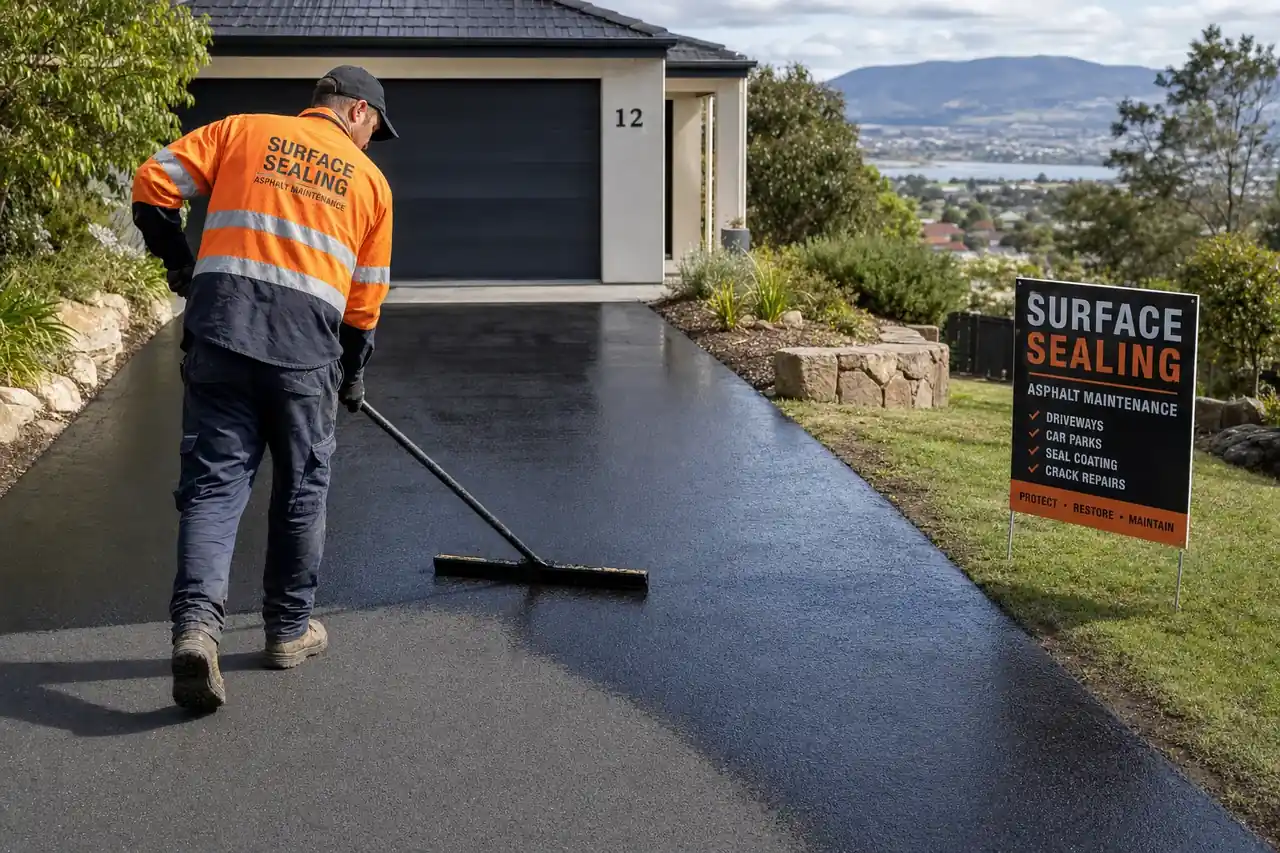
April is an ideal seal coat month in Hobart. Surface temperatures are still warm enough (above 15°C on most days) for the emulsion to bond correctly, and you're ahead of the winter moisture and frost season. If your driveway is at the 5-7 year mark, April is the month to book it.
May: crack filling before frost
Any crack wider than 1mm should be filled before Hobart's first frost typically arrives in May or June. Water sitting in an unsealed crack freezes overnight, expands approximately 9% in volume, and widens the crack. A few seasons of this turns a 2mm crack into a 6mm crack that's past seal coat territory. Crack filler is inexpensive and available from hardware stores, it's worth doing yourself on small cracks.
Don't seal coat in May
Seal coat needs surface temperature above 15°C to cure. Hobart in May averages daytime highs of 13-15°C, marginal at best. An April application gives the emulsion six weeks of good curing weather. A May application risks a soft, tacky result that tracks into the house.
Winter maintenance (June to August)
Winter is observe-and-respond season. You can't seal coat and you shouldn't overlay in most winter conditions. What you can and should do is watch for emerging damage and patch it before it grows.
Post-frost inspection
After any significant frost period in Hobart, a week of sub-zero overnights is enough, walk the driveway and look for new cracking, surface lifting, or edge movement. A crack that appeared during a frost period widened because water froze in it. Patch it in the next dry, mild window before the next frost makes it worse.
Pothole emergency patching
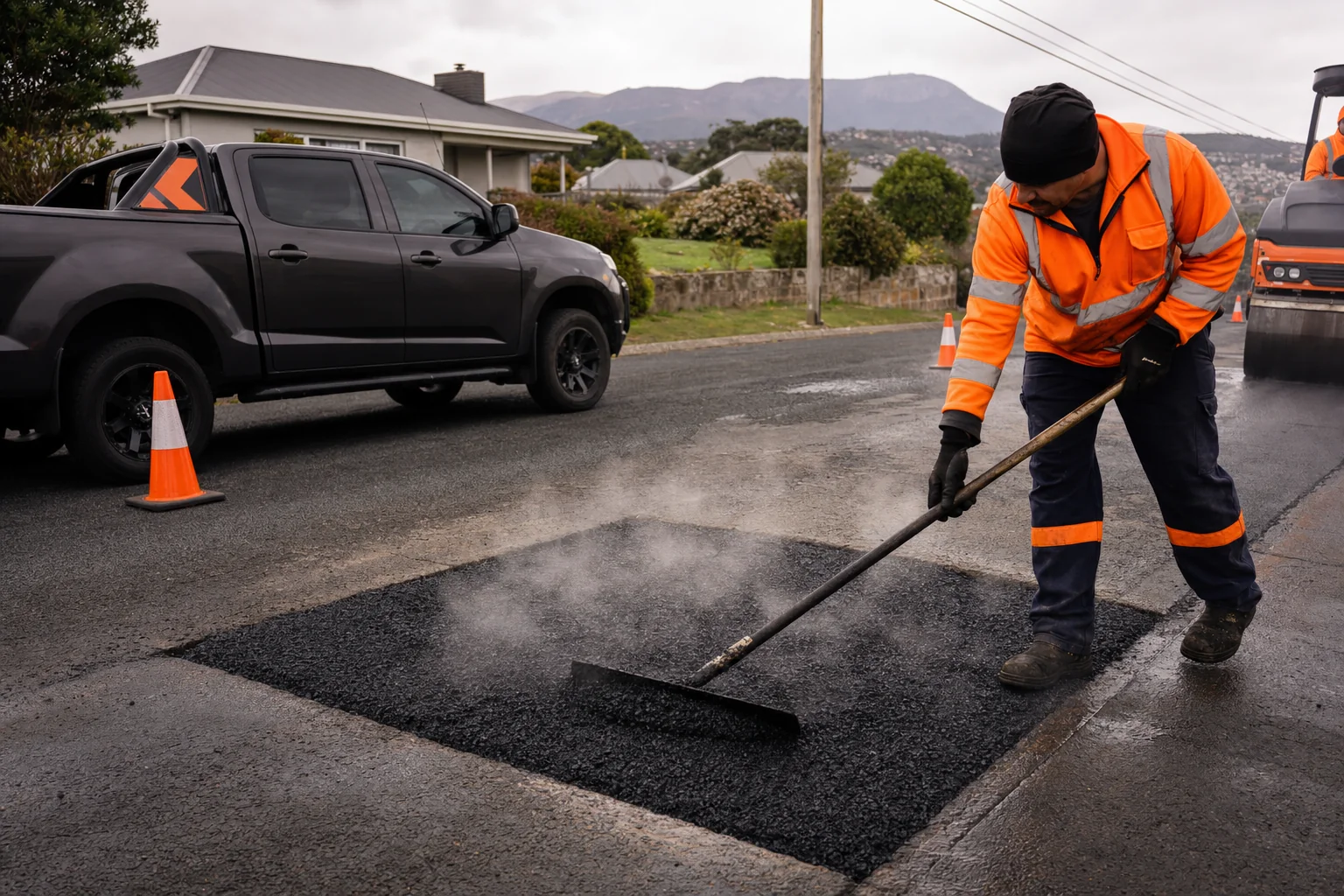
A pothole that appears through winter should be patched promptly. Temporary cold-mix patch is available from hardware stores and can be applied in cold conditions, it's not permanent, but it stops water ingress until a hot-mix contractor can attend. Don't leave an open pothole through the rest of winter.
Spring maintenance (September to November)
Spring is inspection and booking season. Once the worst of the Hobart winter is through, a full driveway inspection tells you what winter did and what the driveway needs before the next season.
The spring inspection checklist
- Walk the full perimeter, check edges for crumbling, separation from garden beds or kerb
- Look along the surface in raking light for depressions or rutting that appeared through winter
- Check for new cracking that wasn't there in autumn, particularly any with vertical step between crack edges
- Check drainage channels and stormwater pits after winter sediment build-up
- Pressure-wash if algae or lichen has established on shaded sections (common in south-facing Hobart driveways)
- Book your seal coat for October-November if the surface needs it
The best time to book is September
October and November are peak booking months for asphalt contractors in Hobart. If you call in September, you'll typically get the date you want. Call in October and you may wait 4-6 weeks for an available slot. Book the maintenance before the season, not during it.
Summer maintenance (December to February)
Hobart summers are mild by mainland standards, surface softening from heat is not a real concern. The main summer risk is UV oxidation of the bitumen binder, which gradually bleaches the surface from black to grey and reduces the binder's flexibility.
In summer, look at the colour of your driveway. If it's gone grey and the surface looks dry and powdery rather than tight and compact, you're looking at a surface that needs a seal coat within the next 12 months. The fading is gradual; catching it before the surface starts cracking is the goal.
Summer edge monitoring
Summer drought in Hobart can cause soil shrinkage adjacent to the driveway, particularly on clay sub-soils around Glenorchy and some parts of Clarence. Shrinking soil pulls away from the driveway edge slightly. If you notice a gap forming between the edge of the asphalt and the garden bed or footpath, it means the sub-base edge is exposed. Fill it with a sand-cement mix before the gap allows water ingress and the next winter frost does more damage.
The seal coat decision: when and how often
| Driveway age | Surface condition | Action |
|---|---|---|
| 0-2 years (new) | Black, tight, no cracking | No seal needed yet, binder still active |
| 2-3 years | Starting to fade slightly | First seal coat recommended, best value timing |
| 4-7 years | Grey, oxidised, hairline cracks possible | Seal coat overdue, do it this spring or autumn |
| 7-10 years | Definite greying, some cracking | Crack fill then seal coat urgently, or assess for overlay |
| 10+ years unsealed | Widespread cracking or aggregate loss | Assess for overlay, seal coat alone insufficient |
The most common maintenance mistake is sealing too late. A seal coat on a 3-year-old driveway that looks fine is excellent preventive maintenance. The same seal coat on a 9-year-old driveway with aggregate loss and cracking is making the best of a situation that needed attention 4 years ago.