The question comes up regularly, someone books a site visit in May and asks whether we can get the driveway in before winter, or whether they have to wait until spring. The answer is: you don't have to wait. Winter asphalt in Hobart is doable, and in some ways it's a better time to get on the books.
Southern Tasmania winters are wet and cold but they're not extreme in the way that would shut down all external construction. The constraints are real but narrow, and understanding them helps you plan properly.
The physics of laying hot mix in cold conditions
Asphalt leaves the plant at around 150°C and needs to be compacted before it cools below approximately 80°C, that's the working window. In warm conditions the mix stays workable for 20-30 minutes after laying. In cold conditions the window is shorter because the mix sheds heat faster into the cold air and cold ground.
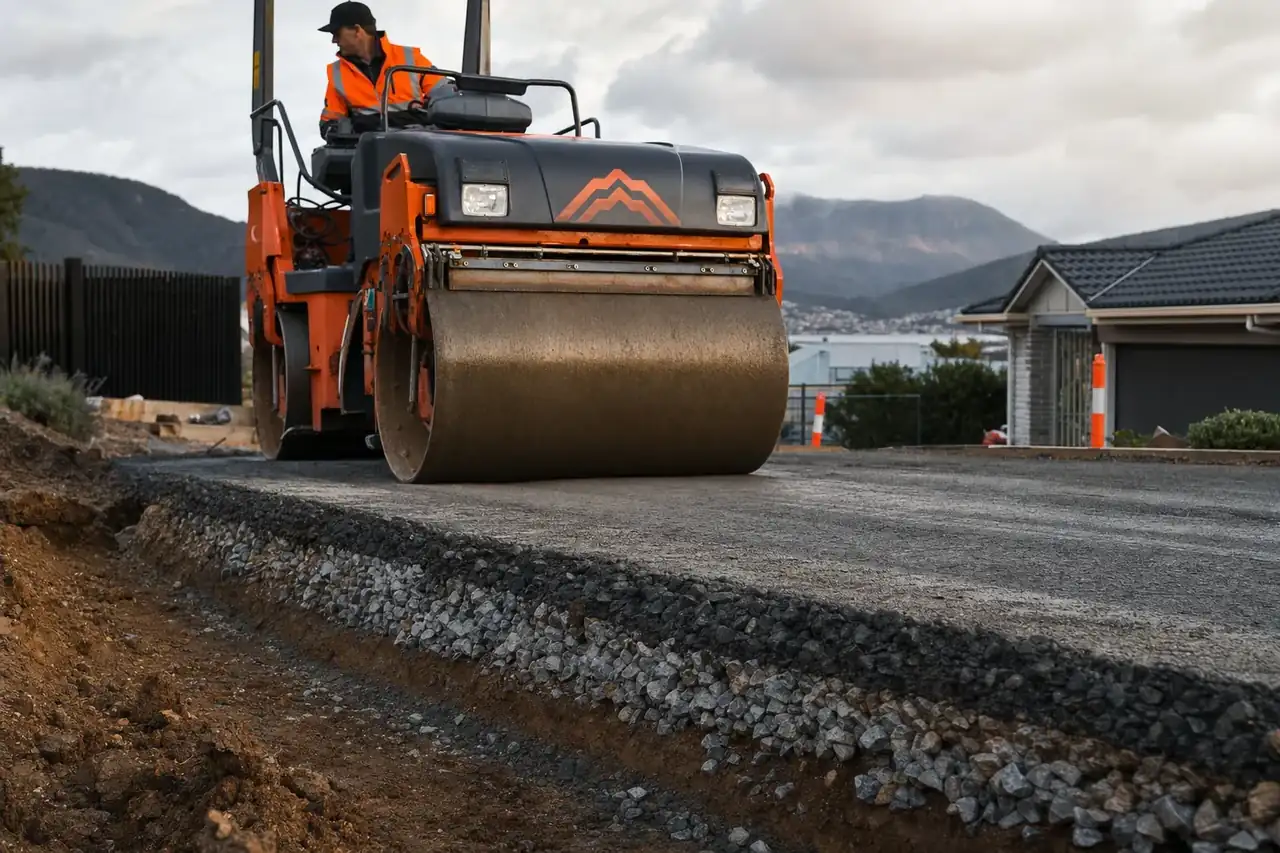
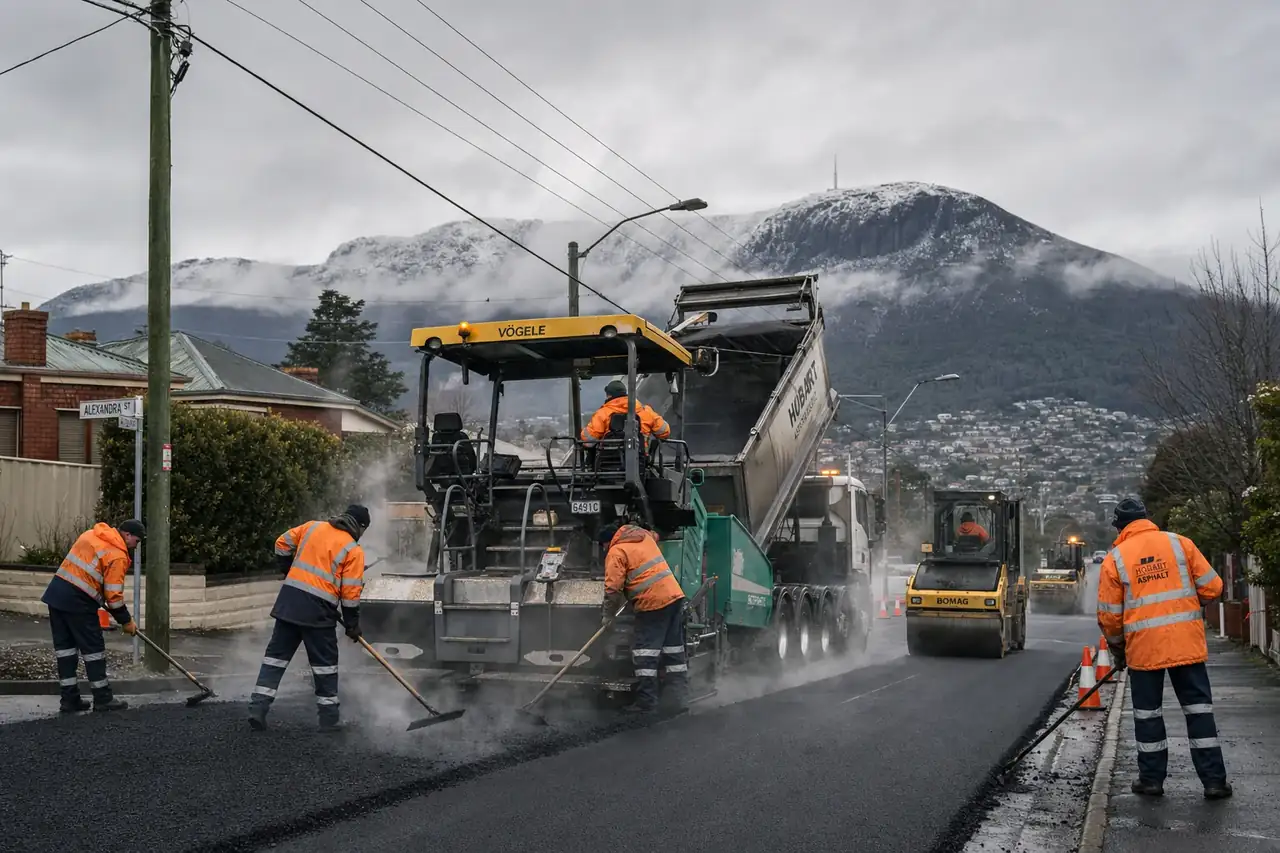
The implication is that in winter, the work has to be tighter and faster. The truck arrives, the mix goes down from the paver, and the roller has to follow immediately. There's no standing around. For experienced crews on standard residential driveways, this isn't a problem, it's just how a cold-weather job runs.
Ground temperature vs air temperature
Ground temperature matters more than air temperature for asphalt work. Air can be 8°C but if the sub-base has been frozen overnight and the ground is still at 2°C, the mix chills too fast to compact properly. The rule of thumb is ground temperature above 5°C at the time of laying.
In most greater Hobart winters, the ground below the top 50mm rarely freezes completely, particularly in lower-lying suburbs. Higher elevation properties, the upper slopes of kunanyi, hillside streets in West Hobart above 200m, rural properties on the Channel Highway, can see hard ground frost and need to be assessed individually.
We check the forecast before every winter job
A 7-day Hobart forecast from the Bureau of Meteorology is part of our job prep in the winter months. If the overnight low on the day of laying is forecast below 1°C, we reschedule. If the week is clear and dry with daytime highs above 10°C, the job runs as planned. We communicate this to the homeowner when we confirm the booking.
Mix thickness in cold conditions
Thinner asphalt mixes lose heat faster than thicker ones. A 25mm overlay in 8°C weather with a cold sub-base is a challenge, the mix can stiffen before it's fully compacted. For winter work in Hobart, we recommend a minimum 40mm compacted thickness, which gives enough thermal mass to stay workable through the compaction pass.
If your project involves a thin overlay, say 20-25mm to correct surface level on an otherwise sound base, we may recommend bumping the overlay thickness slightly for a winter pour, or waiting for October and the reliable return of consistent ground temperature.
Moisture, the bigger risk than cold
| Condition | Can we lay? | Notes |
|---|---|---|
| Dry surface, ground temp 8°C | Yes | Standard winter job, works fine |
| Light dew on surface, air temp 12°C | Yes after drying | Wait 30 minutes post-sunrise, heat will clear dew |
| Ground frost, sub-base frozen | No | Reschedule, mix won't bond to frozen ground |
| Surface wet from overnight rain | No | Sub-base must drain and dry before laying |
| Light drizzle during laying | No | Stop work, water and hot mix don't mix |
| Overcast but dry, ground temp 6°C | Yes | Cold but workable with experienced crew |
| Heavy overnight frost, ground still below 3°C by 10am | No | Move job to next clear morning |
Go/no-go conditions for winter asphalt laying in Hobart. Assessed on the day before the truck rolls.
Surface moisture is the real enemy of winter asphalt, not low temperature alone. Water between the sub-base and the asphalt mat prevents proper bonding and creates delamination, the asphalt lifts away from the base within a year. A dry, cold surface is preferable to a wet, mild one.
What winter jobs look like on site
The preparation is the same as any other season. We arrive, final-check the sub-base for moisture, tack coat the base (the bitumen adhesive spray that helps the asphalt bond), and wait for the tack coat to become tacky, which takes longer in cold conditions, typically 15-20 minutes instead of 5.
The truck is pre-booked for a tighter delivery window. Mix is sometimes ordered from the plant at a slightly higher temperature to compensate for heat loss in transit. The roller follows the paver closely, and a second roller pass happens quickly before the mix drops below the compaction temperature.
Slope management in winter
Hobart's sloped driveways are more challenging in winter. Cold asphalt stiffens faster and is harder to push on a gradient. On grades above 1:8 in winter conditions, we often work uphill with the paver to reduce the risk of the mix sliding before it's compacted. It's a technique variation, not a reason to hold off the job.
What doesn't work in Hobart winter
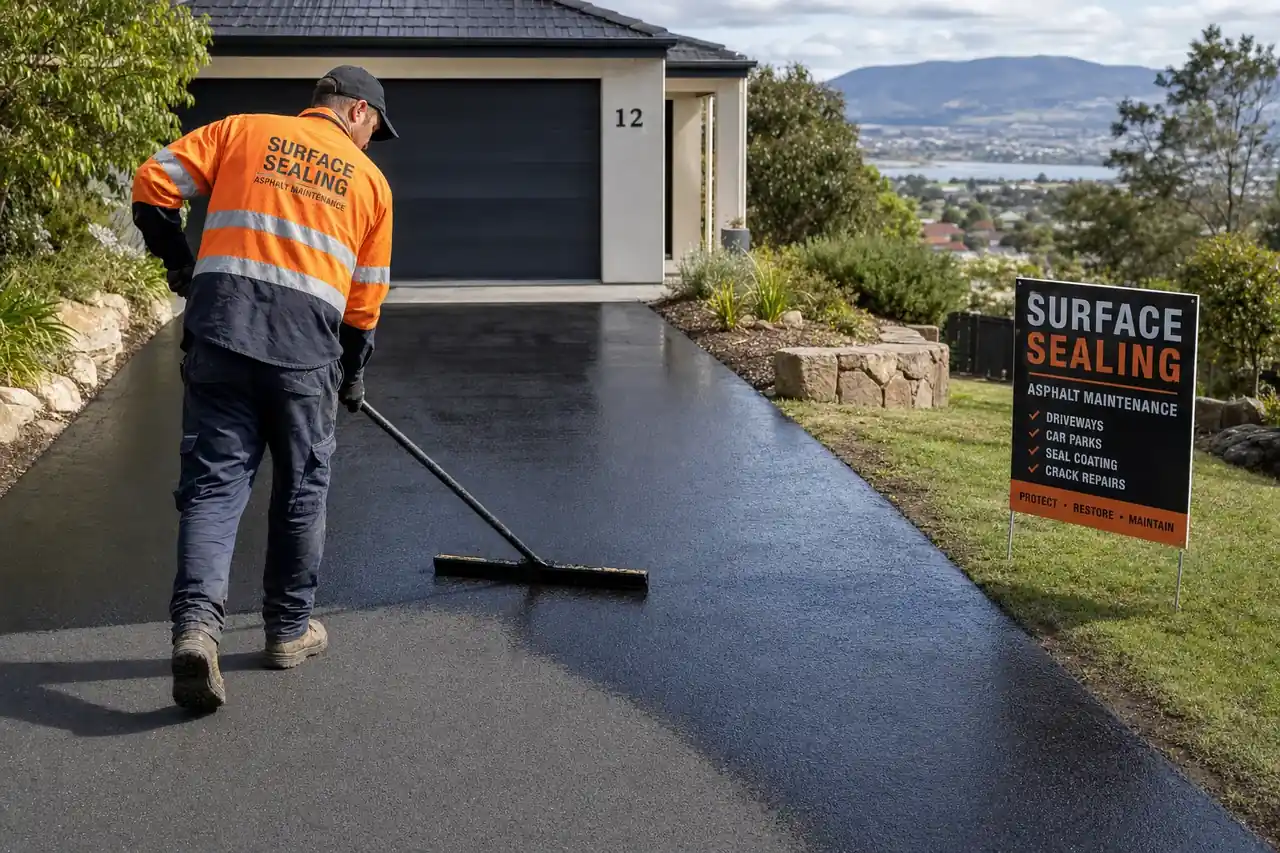
Seal coat work is effectively paused from June through August in Hobart. The bitumen emulsion in seal coat products needs surface temperature above 15°C to cure and bond. Cold temperatures leave the seal coat tacky, liable to track into the house, and prone to washing off in the first rain.
Concrete work also pauses more severely in Hobart winters. The cement hydration process slows dramatically below 10°C and halts near freezing. Asphalt's advantage over concrete in Hobart's climate is most obvious in the June-August period when asphalt jobs can often still go ahead but concrete cannot.
Winter vs summer: what actually changes
| Job type | Summer (Oct-Apr) | Winter (Jun-Aug) |
|---|---|---|
| Full asphalt driveway, new pour | Anytime, dry day | Dry day, ground temp >5°C, 40mm+ mix |
| Asphalt overlay | Anytime, dry day | Minimum 40mm, ground temp >5°C |
| Seal coat | Anytime, surface >15°C | Not recommended, won't cure properly |
| Pothole patch | Anytime | Yes, hot patch available year-round |
| Sub-base prep and compaction | Anytime, dry day | Dry day, avoid frozen ground |
| Concrete crossover or kerb | Anytime, above 10°C | Not recommended, hydration too slow |
Winter scheduling advantages
June, July, and August are the quietest months for asphalt work in southern Tasmania. Booking lead times that stretch to 4-6 weeks in October and November are typically 1-2 weeks in July. If your project has flexibility on timing and you want to get in quickly, winter is the time.
We make decisions about whether a specific winter day is viable based on the 48-hour forecast. Homeowners get a call the afternoon before to confirm the job is running as scheduled or to move it one day if conditions aren't right. It's a more fluid booking process than spring, but the outcome is the same, a properly laid driveway.
Winter asphalt in Hobart isn't the gamble people think it is. The constraints are real and specific. If the conditions aren't right on a given morning, we move the job. If they are, the result is the same as any other season.
How plant scheduling affects winter asphalt quality
Hobart's asphalt plants adjust mix parameters through winter. The bitumen viscosity is managed by increasing the mixing temperature slightly, the mix leaves the plant hotter to compensate for heat loss during truck transit. This is standard cold-weather practice and doesn't change the mix specification or aggregate grading.
The practical implication for homeowners: ensure your driveway isn't too far from the plant or subject to slow traffic during the delivery window. Trucks leaving the plant in Hobart with a winter mix need to reach the site before the mix temperature drops too far. For properties more than 30 minutes from the plant, we schedule tight delivery windows and have the site fully prepared to receive.
The tack coat in cold conditions
Tack coat, the bitumen adhesive spray applied to the base before asphalt is laid, needs longer to become tacky in cold conditions. In summer this takes 5 minutes on a warm base. In winter on a cold surface it can take 15-25 minutes. Laying asphalt over a tack coat that hasn't set is a common cause of delamination in cold-weather pours.
We wait until the tack coat is at the right stage before the paver starts. It adds 15 minutes to the job schedule in winter but prevents the delamination failure that a rushed job creates. A good winter crew knows this and works it into the plan without being asked.
Pothole patching in Hobart winter: the year-round service
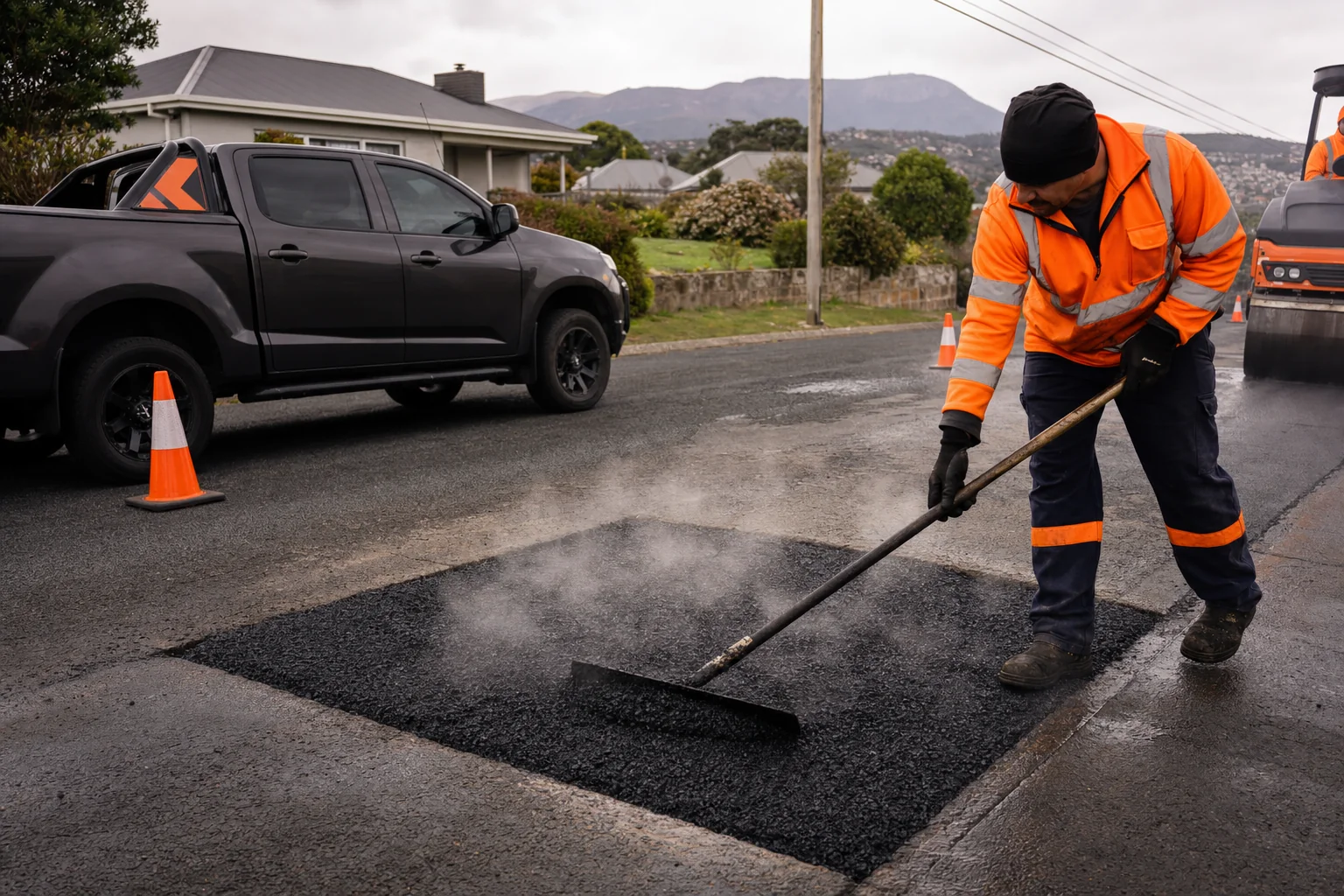
While seal coat pauses in winter, pothole patching continues year-round. It's one of the most in-demand winter services because Hobart's wet winters and frost cycles accelerate pothole formation, particularly in older residential areas like Glenorchy, Moonah and Lindisfarne where the existing pavement is ageing.
Hot mix patching, the only permanent method, is available through the Hobart asphalt plant on standard weekdays throughout the year. We carry hot mix year-round and can patch most private road and carpark jobs within 1-2 weeks even in June and July.
Why potholes form faster in a Hobart winter
- Water enters existing cracks during rain and softens the sub-base below
- Overnight frost freezes the water and expands it, widening the crack
- Morning thaw releases the ice, leaving a larger void
- Vehicle traffic breaks through the weakened asphalt above the void
- Repeat cycle accelerates from a small crack to a pothole in 2-3 freeze-thaw events
Patch potholes before they grow
A pothole that's 150mm wide and 50mm deep is a $150-300 patch job. Left through a winter season, the same pothole can widen to 500mm and deepen to 100mm, requiring $600-1,000 in remediation. Winter is when they grow fastest, don't leave them until spring.
Preparing your driveway for a Hobart winter
If you're not planning a winter asphalt job but want to protect an existing driveway through the cold months, a few steps reduce winter damage.
- Fill visible cracks before the first frost, water in an unsealed crack expands on freezing and widens it
- Check that edge drains and stormwater pits are clear before heavy rain arrives
- Avoid parking heavy vehicles on soft ground at the driveway edges, wet sub-base under an edge is the most common winter failure point
- Apply a seal coat in late autumn (March-April) if the surface is due for one, don't wait until after the wet season
- Check the crossover drainage channel is clear so water flows off the driveway rather than pooling at the kerb